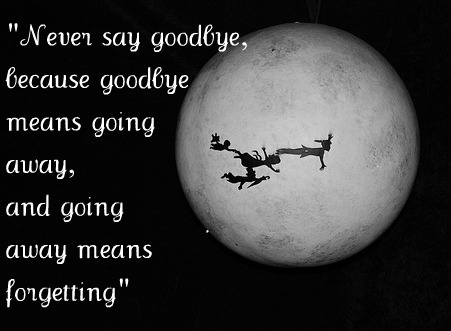
In many ways growing up is similar to grieving.
Sure, there are gains, skills earned, and new experiences to be had, but getting older involves a great deal of loss.
As
we age, we constantly lose securities and familiarity. The world we
have grown to know, changes around us, and we are repeatedly forced to
give up things we love. Over and over again, we are expected to say
goodbye to the only things we have ever known. Unknowingly, we leave
behind old versions of ourselves as we indulge our maturational
tendencies. Then, we reach a point when we realize we no longer are who
we once were.
As a group, we give much of our
attention to celebrating milestones. We honor achievements, and we
rejoice at annual accomplishments. However, all too often we forget that
getting older means leaving something behind.
Monday, October 21, 2013
Monday, October 14, 2013
Feeling It Out
| Image found here |
In general, people dislike negative emotions. We see them as bad feelings that must be fixed. When confronted with unpleasant emotions, we go to great lengths to get rid of them. Mothers shush their babies, begging them not to cry. Teachers offer incentive plans, pleading with children to be good. Over and over again we urge one another to turn our frowns upside down or to grin and bear it. We rush to put band-aids on owies and wipe tears off cheeks. With the best intent, we try to replace pain with pleasantries. In doing so, we push away bad feelings thinking they will stay where we put them. Only they don't.
Life is full of stress. Unfortunately, negative emotions are all around us. We do ourselves a great disservice by avoiding upsetting feelings. Setting aside distress momentarily alleviates anguish. However, avoidance is negatively reinforcing. It relieves us of stress, and deprives us of frustration tolerance skills. The irony is that ignoring pain enhances our sensitivity to it.
In recognizing this phenomenon, I do the only thing I can do. I acknowledge my feelings. Initially I make no effort to fix them. I allow myself to cry, yell, pout, or feel lost. I recognize the sensation, and I identify the source. Where appropriate, I express the feeling. Often, this manifests as honest responses to inquiries about my mental state which results in bewildered expressions as others try to avoid that which I have not.
Monday, October 7, 2013
Crazy Cat, Lady
In the interest of transparency, I have nothing profound to share with you today. I thought about trying to pull something deep out of the recesses of my mind, but to be totally honest I have more important things going on this week. My licensing exam is coming up, and I am only on chapter 2 of 5 in the recommended study book. So, to follow through with my commitment to weekly Monday Musings, I decided to provide you with something superficial. The story of my cat.
Growing up I had a cat named Mallory who was essentially my best friend. This is not to say that I was antisocial. I had human friends. I was just particularly bonded to ole Mallory. So bonded, that I took her to college with me. Unfortunately, I didn't get to see her through to the end of her life. Halfway through my freshman year, she escaped out the front door of the apartment. Being an indoor only cat in a brand new neighborhood many miles from home, she didn't know her way home. We never found her.
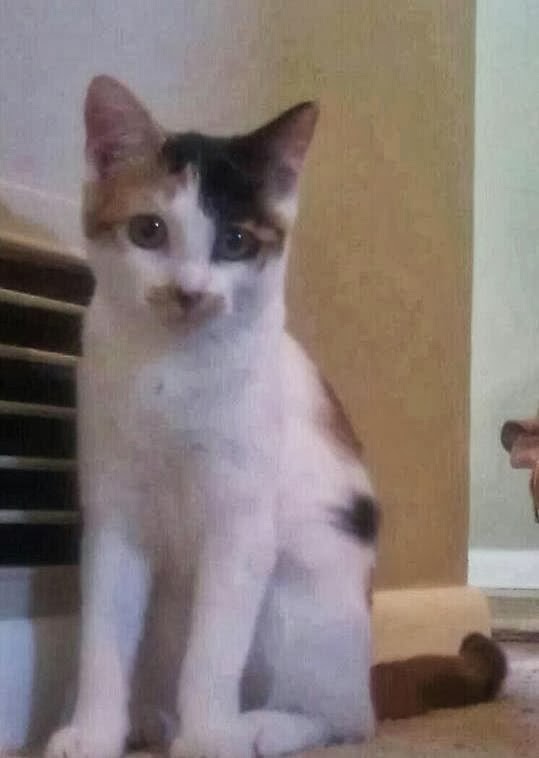
Fast forward to last year, when I was living with my sister for the summer, and a stray kitten literally wandered in our back door. It seemed almost poetic, my last cat walks out the front door, my next cat walks in the back door. However, logistically and financially I couldn't justify keeping her. So I dubbed her Schrödinger because she seemed to exist simultaneously in two realities. She was my cat, and not my cat. I spent the better part of two months searching for her prior home and trying to find her a new home. We bonded during that time, and I quickly realized she hard carved out a place for herself in my world. This is when "Dinger" became my cat.
Over the last year I learned her personality as she climbed the door frame, searched the fridge, rode my bike, and helped me study. She was an odd little creature, but she was my odd little creature. After a few months, I expected she'd begin to settle down. I hoped her maturing body and developing mind would eventually calm to a more regulated less rambunctious feline composure. Only, it didn't. She seemed to get more behavioral. She began to defiantly climb on the kitchen table, bat jewelry off the rack, scratch walls and doors, and actually dug a whole in my carpet in an attempt to enter my bedroom.
I've been in behavioral health for quite some time, and wasn't phased by most of this. Though I did feel at a loss for consequences when I learned that she loved being sprayed with water.... Right?! It wasn't until recently when she began urinating on my items that I thought a visit to the vet was in order. So, this weekend we toted our little Ding-Ding to the doctor, and expressed exasperation at sleepless nights brought on by a restlessly needy kitty cat.
In an ironic twist of fate, I learned that Schrödinger's behavior fit an OCD diagnosis, and that she might respond to treatment with anxiety medications.
And that's the unremarkable story of how a crazy cat found a
Growing up I had a cat named Mallory who was essentially my best friend. This is not to say that I was antisocial. I had human friends. I was just particularly bonded to ole Mallory. So bonded, that I took her to college with me. Unfortunately, I didn't get to see her through to the end of her life. Halfway through my freshman year, she escaped out the front door of the apartment. Being an indoor only cat in a brand new neighborhood many miles from home, she didn't know her way home. We never found her.
Fast forward to last year, when I was living with my sister for the summer, and a stray kitten literally wandered in our back door. It seemed almost poetic, my last cat walks out the front door, my next cat walks in the back door. However, logistically and financially I couldn't justify keeping her. So I dubbed her Schrödinger because she seemed to exist simultaneously in two realities. She was my cat, and not my cat. I spent the better part of two months searching for her prior home and trying to find her a new home. We bonded during that time, and I quickly realized she hard carved out a place for herself in my world. This is when "Dinger" became my cat.
Over the last year I learned her personality as she climbed the door frame, searched the fridge, rode my bike, and helped me study. She was an odd little creature, but she was my odd little creature. After a few months, I expected she'd begin to settle down. I hoped her maturing body and developing mind would eventually calm to a more regulated less rambunctious feline composure. Only, it didn't. She seemed to get more behavioral. She began to defiantly climb on the kitchen table, bat jewelry off the rack, scratch walls and doors, and actually dug a whole in my carpet in an attempt to enter my bedroom.
I've been in behavioral health for quite some time, and wasn't phased by most of this. Though I did feel at a loss for consequences when I learned that she loved being sprayed with water.... Right?! It wasn't until recently when she began urinating on my items that I thought a visit to the vet was in order. So, this weekend we toted our little Ding-Ding to the doctor, and expressed exasperation at sleepless nights brought on by a restlessly needy kitty cat.
In an ironic twist of fate, I learned that Schrödinger's behavior fit an OCD diagnosis, and that she might respond to treatment with anxiety medications.
And that's the unremarkable story of how a crazy cat found a
Monday, September 30, 2013
Generation Adrift
| Image found here |
him lament the current state of his life. He explained that his employment and educational prospects were not unfolding as he had wanted. I listened attentively as he expressed anguish over feeling midway into a life that had gone awry. Insistent that he had previously had a life agenda, he described feeling a failure at having not seen those plans come to fruition. I hugged, validated, and soothed, as he repeated his distress without apparent purpose or intent.
At first, I didn't know how to respond. I wanted to swoop-in with some miracle solution. I wanted to assure him to keep his chin up. I wanted to throw my hands up in the air and yell "you're right! This sucks! Screw it all!" Not knowing what to say, I tried to sort through my myriad of emotional responses, and I was struck with a sense of déjà vu.
It seemed as though I had heard this story before. I recalled a call with a close friend from several weeks prior. It was a routine check-in call, and by all outside accounts this woman's life was going very well. Only, when you asked her she disagreed. To her, she'd missed opportunities to follow her dreams. She felt stuck between wanting to make her dreams happen and feeling like it was too late. This wasn't the first time. When I considered the tone of our chats over the last few years, this was a prevalent theme. She wasn’t the only one either.
In fact, when I thought harder, I could cite a plethora of conversations in a similar vein. I remembered tears over coffee, commiserating with cocktails, and throwing hands in the air during hikes. It seemed that every 20-something I know carried a degree of angst regarding the apparently off-track direction their life had taken. Actually, my own life didn't stray too far from this pattern.
I continued to listen, pulling the pieces of a generation together, as he took a more dire "where did I go wrong?" tone. Then, finally, I spoke.
"I think this is normal," I said.
Honestly, it appears that people in their mid-late 20s all experience some degree of unhappiness with their diverse range of circumstances. For some of us, its feeling we've neglected the urge to begin relationships and create families. For others, it's dissatisfaction with having lost focus on our career goals. There are those of us who wanted to travel more by this point, and others who expected to securely establish themselves in a community. Whatever the flavor, we all seem to identify a portion of our lives that changed course or didn't quite follow the path we intended. As a result, we've got this built up anxiety about feeling adrift in a society that has it all figured out.
What's baffling is the finality of the concern. Somehow, we've gotten it in our heads that it's too late. We look to one another for support. We ask for advice about how to right our course, and yet we expect nothing. We compare ourselves to one another, assuming we are alone in this. We guess that other young adults have it all figured out. Then we are surprised to learn it’s not uncommon, and we lose hope for the future as we bemoan our past.
Monday, September 23, 2013
Flight of the Wendy Bird
A few months back I began to prepare for the completion of my graduate degree by searching for open employment opportunities, but I found myself profoundly unmotivated to update my resume or make active efforts to embark upon my career. So, as a method of forcing myself into the waters I applied for the very first job opening I encountered working with my preferred population. To be quite honest, it was a job I didn't want. It represented a step into the pool for me. It pushed me to update my resume, and practice my application responses. I was still in school and completing my clinical internship. My availability was remarkably limited which removed all the pressure of the process. In fact, I made a point to note that my lack of availability in at least three separate locations throughout my resume and application submission. If I were looking to hire, I would have thrown my cover letter out.
I was, of course, astonished when I received a call to arrange an interview. She described a rigorous interview process that involved a 30 minute writing activity and a case consultation. Having never experienced such an intense process, I rationalized that this would be good practice. Again, I didn't want the job. The pressure was low.
Before I knew it I was called for a second interview involving a mock case presentation and participation in clinical rounds. I started to feel nervous. I still didn't want the job, but I was becoming intrigued by the process and I was afraid I was wasting the agency's time. Knowing I wasn't going to take this job, I decided to just relax and enjoy the experience. So, when I found myself seated at a table with 12 skills trainers, therapists, program managers, and clinical directors, I didn't really flinch. I answered every question honestly; revealing my strengths and exposing my weaknesses. I was comfortable and unconcerned. This is why, when a loud and energetic man jokingly asked me what my favorite cartoon was, I didn't even bother to let him finish asking "why" before startling him with my response.
I explained that I loved most cartoons, children's stories, and super hero tales because of the allegories inherent within them, but that one stood out among the rest: Peter Pan. I went on to state that I truly believed this story was a beautiful metaphor for what it means to grow up. I monologued for nearly 10 minutes about the narrative of a boy without a mother who battles adults as he refuses to grow. The room became silent as I went on and on about the captivation of Wendy as she is pulled between a world where she has to grow up and one that won't let her. I wound down with an explanation of Wendy's ultimate decision to have one foot in both worlds. Crickets chirped, but before the awkwardness set I verbally lunged forward with excitement. "OH!" I started, "and did you guys know that the author of Peter Pan had failure to thrive syndrome?!" With this exclamation, I surged onward with a lecture about J.M. Barrie's traumatic childhood, and his stunted physical development. I explained how the novel was a tribute to his deceased older brother who's reputation forever shadowed him in the eyes of his emotionally abusive mother.
All 12 faces stared speechlessly at me as I finished my soliloquy. My individual discourse had left the entire panel with no apparent segue for completing the interview. Amused with my socially awkward tendency, I did the only thing I could do. I called it for them.
"Obviously I could go on and on about this topic," I said. "I love children's stories, and I appreciate their ability to give insight to the human condition. So...great question!"
Now, three months later, I call that confounded panel of professionals my coworkers.
I was, of course, astonished when I received a call to arrange an interview. She described a rigorous interview process that involved a 30 minute writing activity and a case consultation. Having never experienced such an intense process, I rationalized that this would be good practice. Again, I didn't want the job. The pressure was low.
Before I knew it I was called for a second interview involving a mock case presentation and participation in clinical rounds. I started to feel nervous. I still didn't want the job, but I was becoming intrigued by the process and I was afraid I was wasting the agency's time. Knowing I wasn't going to take this job, I decided to just relax and enjoy the experience. So, when I found myself seated at a table with 12 skills trainers, therapists, program managers, and clinical directors, I didn't really flinch. I answered every question honestly; revealing my strengths and exposing my weaknesses. I was comfortable and unconcerned. This is why, when a loud and energetic man jokingly asked me what my favorite cartoon was, I didn't even bother to let him finish asking "why" before startling him with my response.
I explained that I loved most cartoons, children's stories, and super hero tales because of the allegories inherent within them, but that one stood out among the rest: Peter Pan. I went on to state that I truly believed this story was a beautiful metaphor for what it means to grow up. I monologued for nearly 10 minutes about the narrative of a boy without a mother who battles adults as he refuses to grow. The room became silent as I went on and on about the captivation of Wendy as she is pulled between a world where she has to grow up and one that won't let her. I wound down with an explanation of Wendy's ultimate decision to have one foot in both worlds. Crickets chirped, but before the awkwardness set I verbally lunged forward with excitement. "OH!" I started, "and did you guys know that the author of Peter Pan had failure to thrive syndrome?!" With this exclamation, I surged onward with a lecture about J.M. Barrie's traumatic childhood, and his stunted physical development. I explained how the novel was a tribute to his deceased older brother who's reputation forever shadowed him in the eyes of his emotionally abusive mother.
All 12 faces stared speechlessly at me as I finished my soliloquy. My individual discourse had left the entire panel with no apparent segue for completing the interview. Amused with my socially awkward tendency, I did the only thing I could do. I called it for them.
"Obviously I could go on and on about this topic," I said. "I love children's stories, and I appreciate their ability to give insight to the human condition. So...great question!"
Now, three months later, I call that confounded panel of professionals my coworkers.
Monday, September 16, 2013
Puppy Dogs and Cupcakes
"My last therapist told me it never gets any better," a depressed and deserted child once told me.
Partly amused and mostly horrified, I swallowed bile. "Why do you think she would say that?" I implored; seeking context.
She went on to tell the typical tale of teenage angst and misery shrouded in a deep seeded desire to be independent and grown. This nearly hopeless adolescent girl explained her forward-thinking desire for utopia being met with the harsh reality of a jaded professional telling her it would never be. Then she looked at me, wide-eyed and concerned, with an expression best explained by the question she clearly couldn't ask. Her eyes pleaded with mine, is it true?
I sighed deeply and wrung my hands; trying to determine if I was fully equipped to provide this youth with an answer I have yet to discern for myself. In that moment, my protective mode kicked in. I wanted to puff up and track down that dream dashing clinician for stealing a young girl's nearly lost hope. I wanted to tell her it was all a lie, and everything was just on the brink of perfection. I wanted to insist that, if she persevered a little longer, everything was going to get a lot easier. But, I couldn't hang my hat on a lie.
Yet, I think we all do this. As adults, we want so badly to convince our children that the world is this glorious place. With the best intentions, we tell them that all of their dreams are attainable. We make it sound so simple. Pay attention. Do your homework. Listen to your parents. Follow the rules. Be good for god's sake! We say this like it's the only obstacle in their paths. Then we find these children who, despite their best efforts, can't meet our expectations, and what's the message to them? Try harder. You must not be doing it right. No wonder they struggle.
The saddest part of this whole interaction is that I think the therapist she referenced was trying to help. I think that person was trying to be real with her. Recognizing the false promises inherent in a follow your dreams world, this woman must have tried to counteract the overwhelming expectations set-forth by inconsistent and unsupportive adults. She probably wasn't wrong for doing so either. However, she definitely missed her mark, leaving me with a hurt/confused teenager struggling to rationalize her own survival. With no other adequate explanation, I told this child what I knew to be true.
"I think what she was trying to say," I said "is that it's always going to be hard. Growing up isn't easy. It's not all puppy dogs and cupcakes. Often it's difficult, but that doesn't mean it's not worth it. It absolutely gets better, if you want it to. But there is always going to be stressful things, and what matters is how you cope. You can build the skills to manage your stress. It's possible to truly enjoy your life, but the stress never goes away it just changes."
| Image found here |
She went on to tell the typical tale of teenage angst and misery shrouded in a deep seeded desire to be independent and grown. This nearly hopeless adolescent girl explained her forward-thinking desire for utopia being met with the harsh reality of a jaded professional telling her it would never be. Then she looked at me, wide-eyed and concerned, with an expression best explained by the question she clearly couldn't ask. Her eyes pleaded with mine, is it true?
I sighed deeply and wrung my hands; trying to determine if I was fully equipped to provide this youth with an answer I have yet to discern for myself. In that moment, my protective mode kicked in. I wanted to puff up and track down that dream dashing clinician for stealing a young girl's nearly lost hope. I wanted to tell her it was all a lie, and everything was just on the brink of perfection. I wanted to insist that, if she persevered a little longer, everything was going to get a lot easier. But, I couldn't hang my hat on a lie.
Yet, I think we all do this. As adults, we want so badly to convince our children that the world is this glorious place. With the best intentions, we tell them that all of their dreams are attainable. We make it sound so simple. Pay attention. Do your homework. Listen to your parents. Follow the rules. Be good for god's sake! We say this like it's the only obstacle in their paths. Then we find these children who, despite their best efforts, can't meet our expectations, and what's the message to them? Try harder. You must not be doing it right. No wonder they struggle.
The saddest part of this whole interaction is that I think the therapist she referenced was trying to help. I think that person was trying to be real with her. Recognizing the false promises inherent in a follow your dreams world, this woman must have tried to counteract the overwhelming expectations set-forth by inconsistent and unsupportive adults. She probably wasn't wrong for doing so either. However, she definitely missed her mark, leaving me with a hurt/confused teenager struggling to rationalize her own survival. With no other adequate explanation, I told this child what I knew to be true.
"I think what she was trying to say," I said "is that it's always going to be hard. Growing up isn't easy. It's not all puppy dogs and cupcakes. Often it's difficult, but that doesn't mean it's not worth it. It absolutely gets better, if you want it to. But there is always going to be stressful things, and what matters is how you cope. You can build the skills to manage your stress. It's possible to truly enjoy your life, but the stress never goes away it just changes."
Monday, September 9, 2013
Writer's Block
I am currently going through an adjustment period. I've been coping simultaneously with a plethora of endings and beginnings. While this is a very exciting time, and the vast majority of changes are those that I have spent several years striving for, I have noticed some rather irritating consequences. I'm exhausted, my attention span has shortened, and my creativity has almost entirely dwindled. As a result, the blog that I intended to pick right back up is suffering.
There's nothing to worry about. I can tell these setbacks are temporary. I can feel ideas for new posts brewing, but putting fingers to keys is difficult when I'm faced with all these barriers. My plan is to get into a routine. Then, as I fully adjust to my new lifestyle I will already have a time and procedure for contributing to my weekly blog. I feel really good about this plan. I believe it will support the creation of new material, and the development of my writing will improve. However, it means that even on days like today (when I feel somewhat under the weather and all I want to do is lay on the couch), I have to produce something. This is a problem, because everything I attempt feels forced and is a clunky read.
Rather than push something inexplicable out, I figured I'd provide my readers with an explanation. The truth is I've got a mad case of writers block that can only be alleviated. This can only be alleviated by expelling boring unformulated thoughts to clear the way for for the insightful essays I enjoy most. So, bear with me as I push through, and please stay tuned.
There's nothing to worry about. I can tell these setbacks are temporary. I can feel ideas for new posts brewing, but putting fingers to keys is difficult when I'm faced with all these barriers. My plan is to get into a routine. Then, as I fully adjust to my new lifestyle I will already have a time and procedure for contributing to my weekly blog. I feel really good about this plan. I believe it will support the creation of new material, and the development of my writing will improve. However, it means that even on days like today (when I feel somewhat under the weather and all I want to do is lay on the couch), I have to produce something. This is a problem, because everything I attempt feels forced and is a clunky read.
Rather than push something inexplicable out, I figured I'd provide my readers with an explanation. The truth is I've got a mad case of writers block that can only be alleviated. This can only be alleviated by expelling boring unformulated thoughts to clear the way for for the insightful essays I enjoy most. So, bear with me as I push through, and please stay tuned.
Monday, August 26, 2013
In Reality
| Image found here |
Under most circumstances, this setback would have been manageable. Any other typically developing child would have addressed their concerns and had their needs met in a relatively short period of time. For this child it was the proverbial straw that broke the camel’s back. Although, when you consider her trauma history, this young girl actually handled it quite well. She reported her concerns to an adult, and developed a reasonable plan to address them. Unfortunately, the adults did not communicate the plan with one another, and this girl, whose hopelessness and despair frequently results in depressive mood and self-harm behaviors, did not get her needs met. She instead got stuck defending herself to one adult, when the first had left without explaining the circumstances. The subsequent dispute, spiraled into an argument that evolved into a power struggle, and ended in undesired consequences. Then, she cried out for a therapist, and that is when I entered, as one adult was trying to explain a convoluted miscommunication to a teenager who'd lost all hope.
I stepped in, pulled her out of the stressful environment, and into a quiet room. We sat on the backs of chairs and looked out the window as she explained the entire scenario to me. I nodded along and reflected to the best of my recently conferred master's level ability. Then she finished her story. The room went silent. She hung her head, picked at her finger nails, and waited for my little bit of wisdom. After what felt like an eternity, I said the only thing I could think of.
"This sucks."
At first, I felt horrible. Here I am: the newly anointed therapist with fresh education. I had been coaching this kid on using her assertive communication skills for weeks. I come into a confusing situation, and all I can say to her is "this sucks." What the hell did I think I was doing? She needed answers, and I was giving her nothing.
So, I combed my mind, trying to come up with something, anything, that solved or explained the situation. We sat in silence again. She shifted on the back of her chair, tracing the crease of the material with her finger as she moved. Clearly she was done talking. It was my turn now.
I watched her tilt her head as she peered out the window; avoiding my eye contact. Think of something, I thought to myself, anything. Don't let her give up, not now. But, every intervention I devised felt like a lie. The truth was this was a real life issue. No matter what level of care you require, or how out of control your emotions are, there's always going to be the potential for others to let you down and that sucks. So, I told her that.
I said, "I can tell how hard you tried to communicate your concerns, and it's really frustrating to hear that the adults involved let you down. That's not fair." I went on to tell her how proud I was of her attempts to solve the problem. I reflected that the resulting scenario probably felt like a failure that brought about consequences she didn't want. Ultimately, my final message to her was probably more for me than anyone else. Though, I think it helped us both.
I told her that we can't control what other people do with the information we give them. All we can do is try our best to control what comes off on our end, and that's why it's important to keep at it. You've got to practice the skills to get better at them, but no one can promise that you'll always be successful. Sometimes, despite our best efforts, things don't work out. That's when it sucks the most. When we tried really hard, did everything we could, and it still didn't turn out right. But, if we keep on trying, one day we will limit those interactions as much as possible, and our successes will outweigh the setbacks.
Monday, August 19, 2013
My Objectives
In my previous job it was typical for staff to repeatedly remind the kids of their daily and long-term treatment and behavioral objectives. Imagine things like:
You get the idea, but there were also the incredibly frequent and surprisingly requisite lessons on social norms. (ex. "We don't ask strangers to lick our faces").
Well, I've decided that I need a specialist to follow me around doing just this. Today my goals would be something like:
Actually, I might be able to do most of these reminders myself, but I have yet to come up with a solution for the lessons in social norms. Clearly I can't do this alone. If I could I wouldn't have recently asked someone at a bar to smell me. So, who's up for the job? I'll pay you in sardonic comments.
Anyone? Anyone? No?
"Oops, remember you are working on putting your own journal away."
"You are learning to use your words."
"We're going to practice ignoring friends that tease, because that's kinda hard today."
and
"You are working on asking a teacher for help."
"You are learning to use your words."
"We're going to practice ignoring friends that tease, because that's kinda hard today."
and
"You are working on asking a teacher for help."
You get the idea, but there were also the incredibly frequent and surprisingly requisite lessons on social norms. (ex. "We don't ask strangers to lick our faces").
Well, I've decided that I need a specialist to follow me around doing just this. Today my goals would be something like:
"Oops, remember you don't have a maid. So it's your job to do the dishes.."
"You're learning to be self-sufficient. That means you should probably stop calling your mommy every time you are confused about life."
"We're going to practice not embarrassing the crap out of yourself, because that seems to be hard for you."
and
"You're learning to be self-sufficient. That means you should probably stop calling your mommy every time you are confused about life."
"We're going to practice not embarrassing the crap out of yourself, because that seems to be hard for you."
and
"You are working on remembering if you took your allergy medicine, and therefore not accidentally overdosing."
Okay, my "special teacher" might have more sass than the average treatment professional, but it's all a matter of meeting the client where they're at right? That's especially true when the person is an easily amused self-deprecating therapist in training.Actually, I might be able to do most of these reminders myself, but I have yet to come up with a solution for the lessons in social norms. Clearly I can't do this alone. If I could I wouldn't have recently asked someone at a bar to smell me. So, who's up for the job? I'll pay you in sardonic comments.
Anyone? Anyone? No?
Monday, August 12, 2013
Acceptance
| Image found here |
"No thank you," he sighed. "I want to play with a human."
Understandably, I balked at this response. I tried to explain to him that even though I was, in his eyes, a teacher, I was a member of the homosapien species with which he identified.
He didn't believe me. A nearby colleague, having heard the conversation, attempted to assist by explaining that despite his beliefs "teachers are humans too," but the tow-headed child just looked at us sympathetically and shook his head. His expression was clear: these creatures don't understand what I'm saying. So, we agreed to disagree, and I sat quietly by as I watched this perpetually lonely boy wait for another (human) child to ask him to play.
I initially struggled to understand this interaction, and I ultimately wrote it off as a "kids will be kids" expression. When I pause to reflect upon this amusing memory now, I am struck with how incongruent that interpretation is with my own beliefs.
I wholeheartedly believe that children are amazingly intelligent. Children hold a special kind of intelligence that is remarkably self-aware and intuitive when you are able to interpret it. It seems to me that, often, children struggle emotionally because they do not have the words to communicate what they know and what they feel. Many times we, as adults, do not understand what they are saying to us, and we respond with patronizing laughs that disregard their experiences.
When I remember this outlook, and think about my role in this boy's life. His meaning was actually quite clear. He may as well have said:
"You're not the same as me."
"You don't know what it's like."
"I want to belong."
Now that this message is clear, I think it's an important one to remember. The truth is, no matter how my rapport with this boy was, no matter how much he felt supported by me, and no matter how much he claimed to like me, I could never truly understand where he was coming from. The sense of belonging and relief that comes from being understood on that level is a support that cannot be manufactured or taught in school.
Subscribe to:
Comments (Atom)